Why Large Patch Hits Some Gwinnett Lawns and Skips Others on the Same Street
Explore local offers & get in touch with a local branch!
Large patch disease shows up on some Gwinnett lawns every fall and never touches others on the same street, and which category a given yard falls into usually comes down to one thing: which grass is actually growing in it.
Why It's Selective
The fungus behind large patch targets centipede, zoysia, and St. Augustine grass specifically, becoming active when soil temperatures drop into the 50s and 60s while moisture stays high, conditions a Gwinnett fall produces reliably. Bermuda and tall fescue, the other two grass types common across the county, aren't susceptible to this particular disease, which is why a homeowner with a bermuda or fescue lawn can watch a neighbor's zoysia develop large patch without ever seeing it themselves.
Why This Makes General Advice Risky
This is exactly the kind of situation where knowing your grass type matters more than general lawn care advice found online. A treatment plan built around large patch prevention does nothing useful on a bermuda lawn that was never at risk for it in the first place, and skipping prevention on a zoysia lawn because "the neighbor's lawn looks fine" ignores that the neighbor may simply have a different grass type entirely.
What It Looks Like, and the Cold-Weather Myth
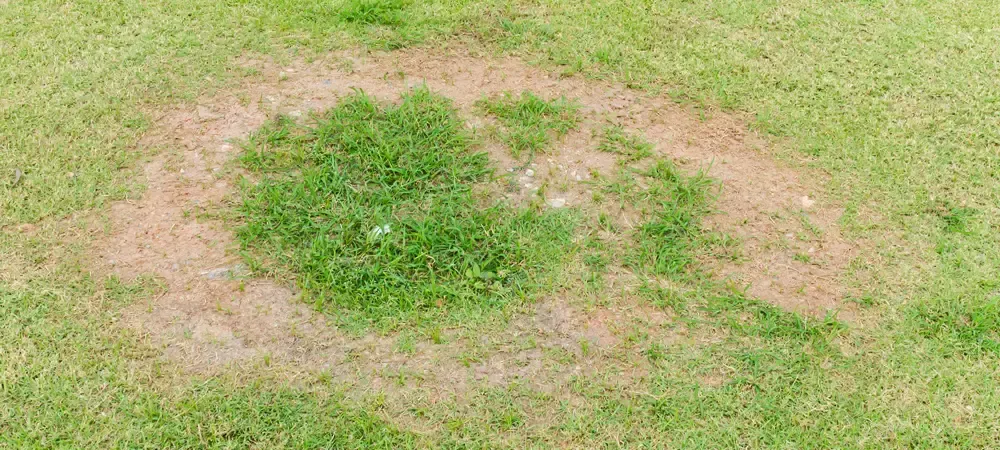
The disease shows up as roughly circular patches, tan to brown, sometimes with a darker ring at the edge where the fungus is actively spreading. A common assumption is that it clears up once the weather turns cold. The fungus slows in winter but doesn't die off, persisting in the thatch layer until conditions favor it again the following fall, typically in the same spot.
What Actually Helps, for the Grass Types at Risk
Nitrogen fertilization within six weeks of a susceptible grass heading into dormancy feeds the exact soft growth the disease spreads through fastest. Improving drainage and avoiding evening irrigation both help limit how far an outbreak spreads, but only on the grass types actually vulnerable to it in the first place.
Seeing brown circular patches and not sure if your grass type is even at risk? Call Freedom Lawns at 770-543-8019 and we'll confirm what you're dealing with.
Get a Free Quote