
Why Richmond's Humid Summer Nights Are Brown Patch Season for Fescue
Explore local offers & get in touch with a local branch!
Richmond's humid summer nights create close to ideal conditions for brown patch on fescue lawns, and the disease often appears seemingly overnight after a stretch of exactly the muggy, still weather the area gets most Julys and Augusts.
What's Actually Causing It
Brown patch is caused by the fungus Rhizoctonia solani, and tall fescue's susceptibility to it is well documented by Virginia Cooperative Extension's own turfgrass program. The disease becomes active when nighttime temperatures stay above roughly 65 degrees and grass blades stay wet for extended periods, conditions Richmond's humid, still summer nights produce regularly, especially in low-lying or poorly ventilated parts of a yard.
What It Actually Looks Like
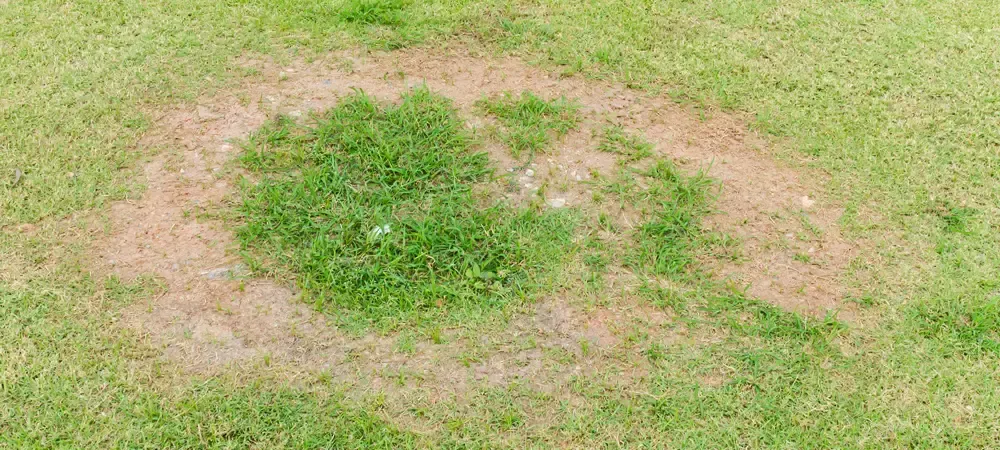
The disease shows up as roughly circular patches, tan to brown, sometimes with a grayish ring at the edge visible on dewy mornings. Unlike a root disease, brown patch mainly damages leaf tissue rather than the crown, which is why an affected lawn typically recovers once conditions turn less favorable, provided it isn't stressed further in the meantime.
The One Factor Homeowners Control Most
Excess nitrogen is the single biggest factor homeowners have direct control over. Fertilizing heavily right before or during a hot, humid stretch feeds the exact soft growth brown patch spreads through fastest. Holding off on nitrogen through the peak of summer, and shifting any needed feeding to early fall instead, removes one of the disease's biggest advantages.
Watering and Mowing Habits That Help
Watering timing matters just as much as the amount. Irrigating in the early morning lets the lawn dry through the day, while evening watering leaves grass wet all night, right when the fungus is most active. Raising mowing height during summer also helps, since taller grass promotes deeper roots and more stored energy to recover from an outbreak once conditions improve.
A lawn that gets left alone through a brown patch outbreak, rather than pushed with fertilizer to "fix" the brown spots, typically recovers on its own once cooler, drier weather returns in fall. If patches keep returning to the same spots each summer, a targeted disease control treatment timed to early summer, before symptoms appear, works better than treating an active outbreak.
Seeing circular brown patches show up after a muggy stretch? Call Freedom Lawns at 804-245-2993 and we'll help you tell brown patch from drought stress.
Get a Free Quote