
Why Large Patch Is Brunswick County's Most Common Fall Lawn Problem
Explore local offers & get in touch with a local branch!
Large patch disease is the most common fall lawn problem Brunswick County centipede lawns face, and the county's heavy reliance on centipede as the default low-maintenance grass means more lawns here are exposed to it than in a market with more turf-type variety.
Why Centipede Is So Vulnerable
The fungus behind large patch becomes active when soil temperatures drop into the 50s and 60s while moisture stays high, conditions a Brunswick County fall produces reliably along the coast. Centipede grass is particularly vulnerable because it grows and recovers slowly compared to other warm-season grasses, giving the disease more time to establish and spread before the lawn can outgrow it on its own.
What It Looks Like, and the Cold-Weather Myth
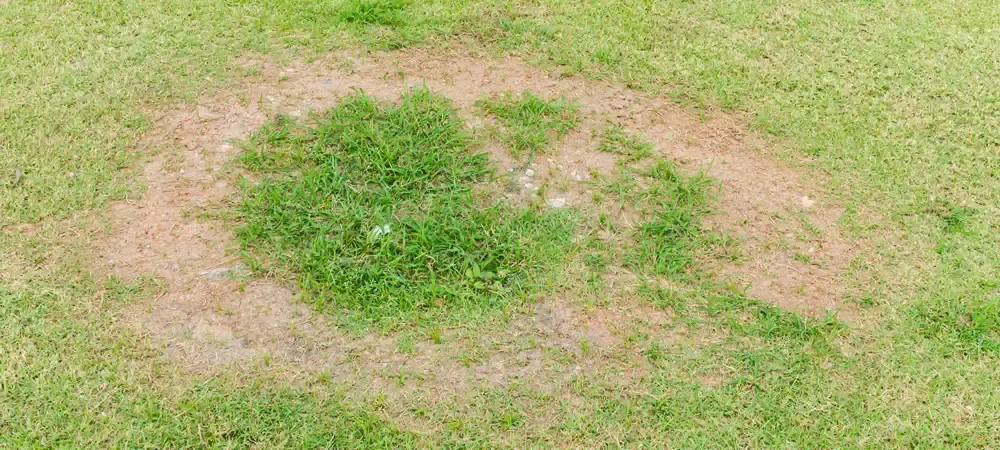
The disease shows up as roughly circular patches, tan to brown, often with a darker ring at the edge where the fungus is actively spreading. A common assumption is that cold weather clears it up. The fungus slows down in winter but doesn't die off, persisting in the thatch layer until favorable conditions return, typically in the same section of lawn the following fall.
What Actually Limits an Outbreak
Nitrogen fertilization within six weeks of centipede heading into dormancy feeds the exact soft growth the disease spreads through fastest, which is why fall feeding on centipede needs more careful timing than a generic schedule allows. Improving drainage and avoiding evening irrigation, both of which keep grass wet overnight during the fungus's most active hours, help limit how far an outbreak spreads once it starts.
Why Early Treatment Matters
Treating the first sign of thinning or discoloration, rather than waiting to see how much a patch grows, gives a treatment the best chance of working before the fungus has spread through a larger section of a centipede lawn that's already slow to recover on its own.
Seeing brown circular patches show up this fall? Call Freedom Lawns at 910-443-3072 and we'll take a look before it spreads further.
Get a Free Quote