
Why Fall Rain Makes Large Patch Worse on Wilmington's Centipede Lawns
Explore local offers & get in touch with a local branch!
Large patch disease shows up on centipede and St. Augustine lawns in New Hanover County most often right after a wet spell in September or October, exactly when Wilmington's fall rain, including the tail end of tropical systems moving up the coast, keeps soil saturated at the same time soil temperatures are cooling into the fungus's preferred range.
Why This Disease Targets Centipede Lawns So Specifically
The fungus behind large patch lives in the soil year-round, but it only becomes active when soil temperatures drop into the 50s and 60s while moisture stays high. NC State's TurfFiles program ranks centipede grass, the most common lawn type in Wilmington and New Hanover County, as the single most susceptible warm-season species to this disease, ahead of zoysia and St. Augustine, because it already grows slowly and recovers from stress more slowly than the others, giving the disease more time to spread before the lawn can outgrow it.
Coastal Timing Note: A single tropical system passing offshore in September can saturate soil for a week or more, right as centipede lawns are heading into dormancy and have the least ability to fight back.
What Large Patch Actually Looks Like
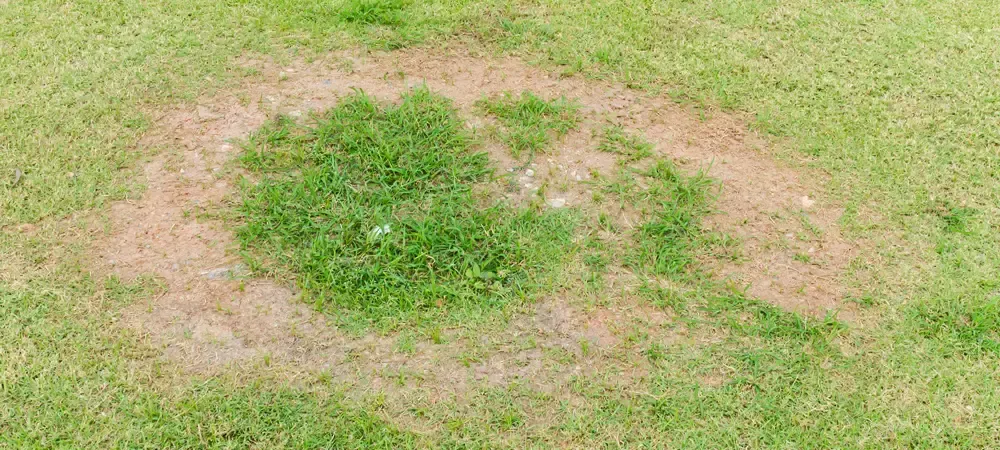
The disease shows up as roughly circular patches of brown or yellowing grass, sometimes several feet across, often with a slightly darker or reddish ring at the edge where the fungus is actively spreading. Grass blades near the patch edge pull away from the soil easily when tugged, since the fungus attacks the base of the leaf sheath rather than the roots themselves.
Where It Tends to Come Back Year After Year
Lawns in low-lying, poorly draining sections of the county, closer to marsh edges or older neighborhoods with heavier clay pockets mixed into otherwise sandy soil, tend to see large patch return in the same spots year after year unless the underlying drainage problem gets addressed and not just the fungus itself.
Myth: It Clears Up on Its Own Once the Weather Turns Cold
The fungus does slow down in winter, but it does not die off. It persists in the thatch layer through the cold months and reactivates in the same spots the following fall if the drainage and thatch problems that let it take hold in the first place are never addressed.
What Actually Helps
Improving drainage in low spots, avoiding late-day watering that leaves grass wet overnight, and reducing thatch buildup all limit how much moisture sits at the soil surface during the exact weeks the disease is most active. Mowing an actively infected section at its normal height, rather than scalping it to make the patch less visible, matters too, since cutting too short removes the energy reserve an already-stressed lawn needs heading into winter. If patches are already visible, a targeted disease control treatment works best when applied at the first sign of thinning or discoloration, before the fungus has spread through a large section of lawn.
Seeing brown circular patches show up after a rainy stretch? Call Freedom Lawns at 910-350-2828 and we'll take a look before it spreads further.
Get a Free Quote