Why Large Patch Hits Harder Near Charleston's Tidal Creeks and Marshes
Explore local offers & get in touch with a local branch!
Large patch disease and Charleston's flat, low-lying terrain are a bad combination, and a lawn that sits close to a tidal creek or marsh edge is dealing with a drainage disadvantage that a lawn on higher, better-drained ground further from the water doesn't face in the same way.
Why Terrain Matters as Much as Weather
The fungus behind large patch becomes active when soil temperatures drop into the 50s and 60s while moisture stays high, conditions that linger longer in Charleston's flat Lowcountry drainage basins than in markets with more natural slope to move water away. Centipede and St. Augustine, both common across the area, are particularly vulnerable because they recover from stress slowly, giving the disease time to spread before the lawn can outgrow it.
What Clemson Recommends
Clemson Extension's guidance on lawn drainage is direct about the connection: standing water creates an environment conducive to plant disease, and correcting drainage, through surface drains, French drains, or both, does more to prevent recurring problems than treating each outbreak after it appears. Winter is the recommended time to install this kind of fix, timed well ahead of the fall conditions that actually trigger large patch.
What It Looks Like, and the Cold-Weather Myth
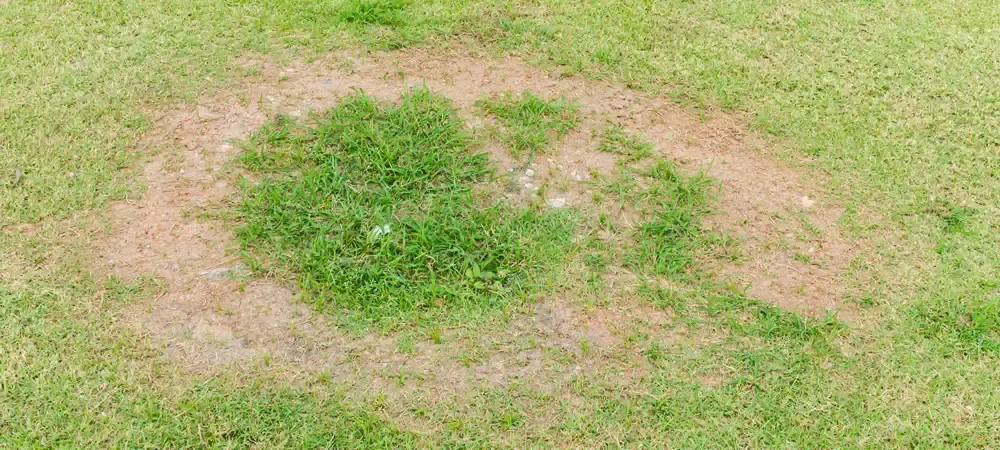
The disease shows up as roughly circular patches, tan to brown, with a darker ring at the active edge. A common assumption is that cold weather clears it up. The fungus slows but doesn't die, persisting in the thatch layer until favorable conditions return, typically in the same spot the following fall.
Which Properties Are Most at Risk
A property with a low section that holds water longer than the rest of the yard after rain is a higher-risk candidate for recurring large patch than one with even drainage throughout, regardless of how well the rest of the lawn is maintained.
Dealing with large patch that keeps coming back to the same low spot? Call Freedom Lawns at 843-552-4444 and we'll look at drainage, not just the disease.
Get a Free Quote