
Why Large Patch Hits Golf-Community Zoysia Lawns Hard Each Fall
Explore local offers & get in touch with a local branch!
Large patch disease shows up on zoysia lawns in Myrtle Beach's golf course communities most often after a wet stretch in September or October, and the tight, high-end zoysia varieties common in these neighborhoods are just as vulnerable to it as the centipede grass more typical of a standard subdivision.
Why Zoysia Isn't Immune
The fungus behind large patch lives in the soil year-round but only becomes active when soil temperatures drop into the 50s and 60s while moisture stays high, conditions a Grand Strand fall produces reliably. Zoysia's dense, fine-textured growth, prized in golf-community landscaping for its manicured look, holds moisture at the soil surface longer than a coarser grass would, which works in the disease's favor during exactly this window.
What It Looks Like, and the Myth That It Just Goes Away
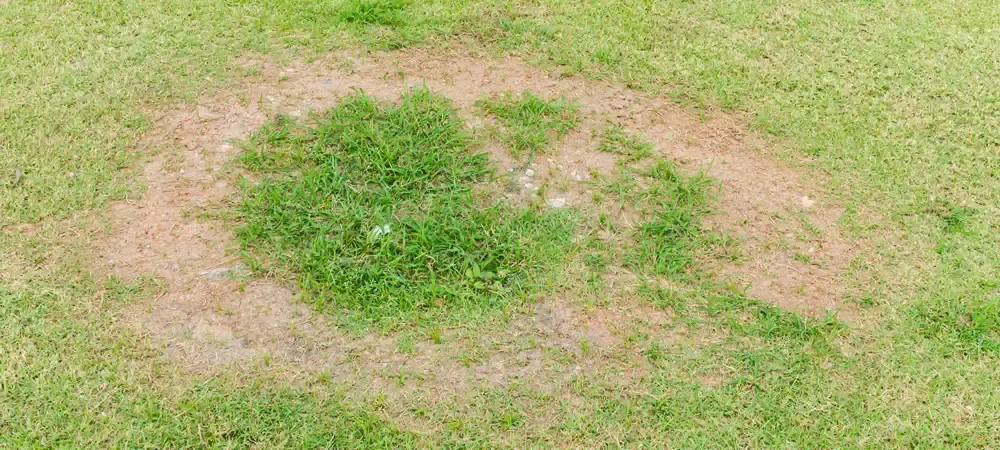
The disease shows up as roughly circular patches, tan to brown, sometimes with a darker ring at the edge where the fungus is actively spreading. A patch that starts small in September can expand steadily through fall if conditions stay favorable, sometimes merging with a neighboring patch before the lawn goes fully dormant for the season.
A common assumption is that it clears up once the weather turns cold. The fungus slows in winter but doesn't die off, and persists in the thatch layer until conditions favor it again the following fall, often reappearing in the exact same spot rather than a new area of the lawn.
What Actually Helps
Nitrogen fertilization within six weeks of the grass heading into dormancy feeds the exact soft growth the disease spreads through fastest, which is why a fall feeding program on zoysia needs to be timed carefully rather than applied on the same generic schedule used for spring and summer. Improving drainage and avoiding evening irrigation, which leaves grass wet overnight during the fungus's most active hours, both help limit how far an outbreak spreads.
In a golf-community setting where uniform, manicured turf matters more for curb appeal, a targeted disease control treatment at the first sign of thinning, rather than waiting to see how bad a patch gets, keeps a small problem from becoming a visible one along a shared common area or fairway-facing lot.
Seeing brown circular patches on your zoysia this fall? Call Freedom Lawns at 843-651-6500 and we'll take a look before it spreads further.
Get a Free Quote